Dual Universe
2021
Novaquark
I worked as the Level Designer on this project. My duties included:
- • Blockouts and implementation of levels, player hubs, ships and instanced areas.
- • Design and implement the FTUE (First Time User Experience) for core game features and mechanics.
- • Level and Game Design documentation.
- • HTML and CSS scripting for in-game interfaces, maps, signs, and player-facing elements.
- • Collaboration with team members to construct enormous megastructures.
Level Designer
- • Using in-house development tools, created voxel-based structures, tutorials, levels, events and spacecraft for use in a massively multiplayer online experience
- • Designed and prototyped interactive gameplay elements for use in a Massively Multiplayer Online space (Puzzles, Trade/Stock Market, Interfaces.)
- • Created lua scripts for in-game features (tutorials, trading.)
- • Wrote focused documentation on game features, levels and mechanics
- • Designed in-game assets with Photoshop, Hexels3 and Aseprite for use in UI, in-game display screens and social hubs
- • Created HTML and css templates for use within in-game elements tied to player interaction (maps, displays, interactive menus etc)
- • Localization of French text to English
Design for Dual Universe
A spacefaring MMO with voxel-based crafting and deep physics, every design on this project was manually built, block by block through its voxel crafting system. My primary responsibilities were crafting the FTUE (First Time User Experience) tutorial areas, building player hubs and instances, and building spacecraft for use by players as templates within the in-game markets.
I was in charge of the design and scripting for the Mining, Building and Market tutorials - no small task, as these systems were all complicated. Of the three, the voxel building tutorials were the most complex - there were many tricks and techniques a player would need to learn to make the most of the system. I devised a 'clean-room' style approach that I would use for both the Basic and Advanced versions. Each room would teach a separate technique of the Build Tool, and challenge the player to use that knowledge before progressing. To reduce cognitive load, I split this into two separate tutorials (Basic and Advanced, respectively.)
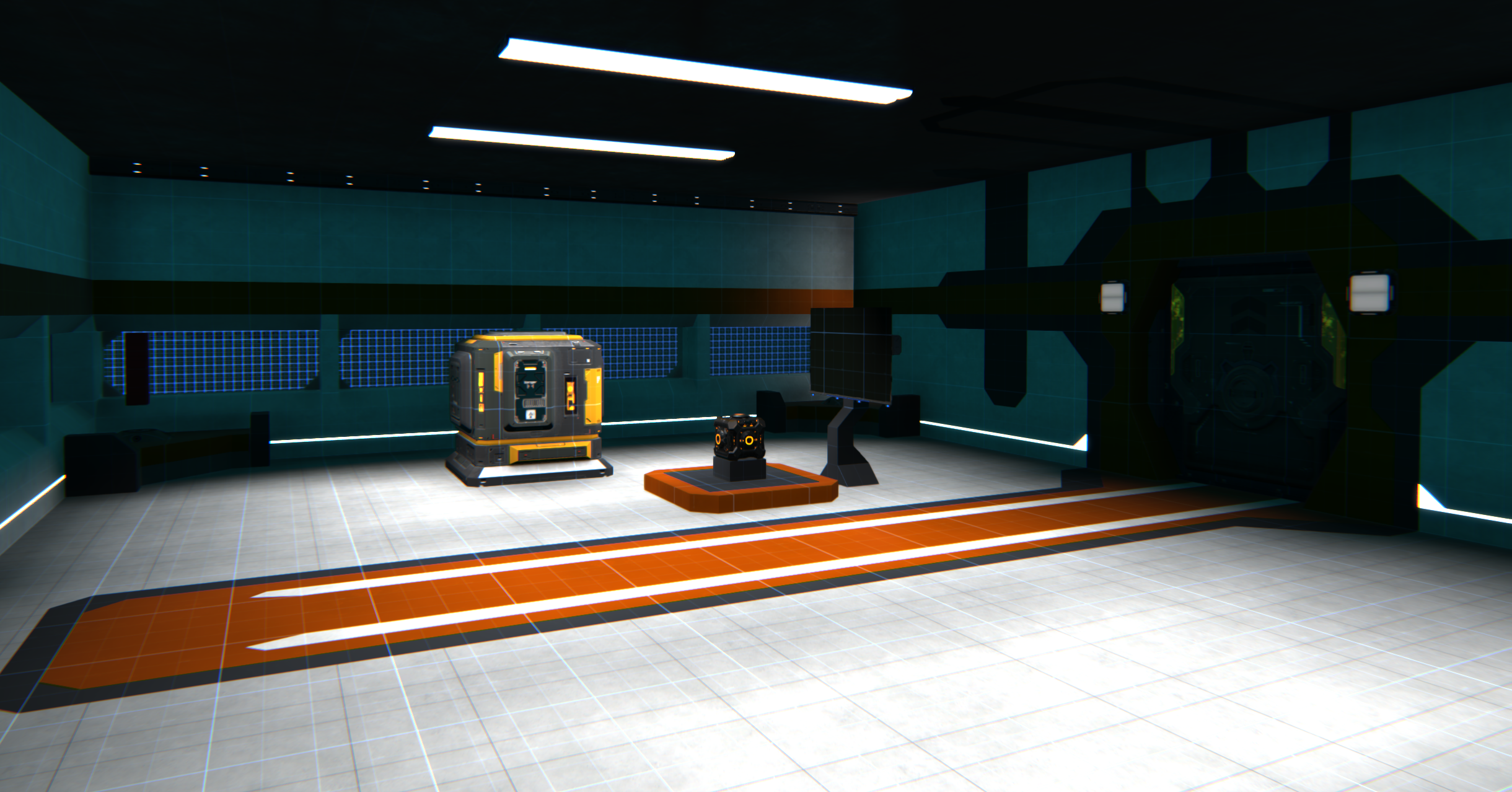
The Basic Building rooms taught the basics of choosing a block in the player inventory, and placing it in a space to form a specific voxel shape. Players advanced through these in sequence.
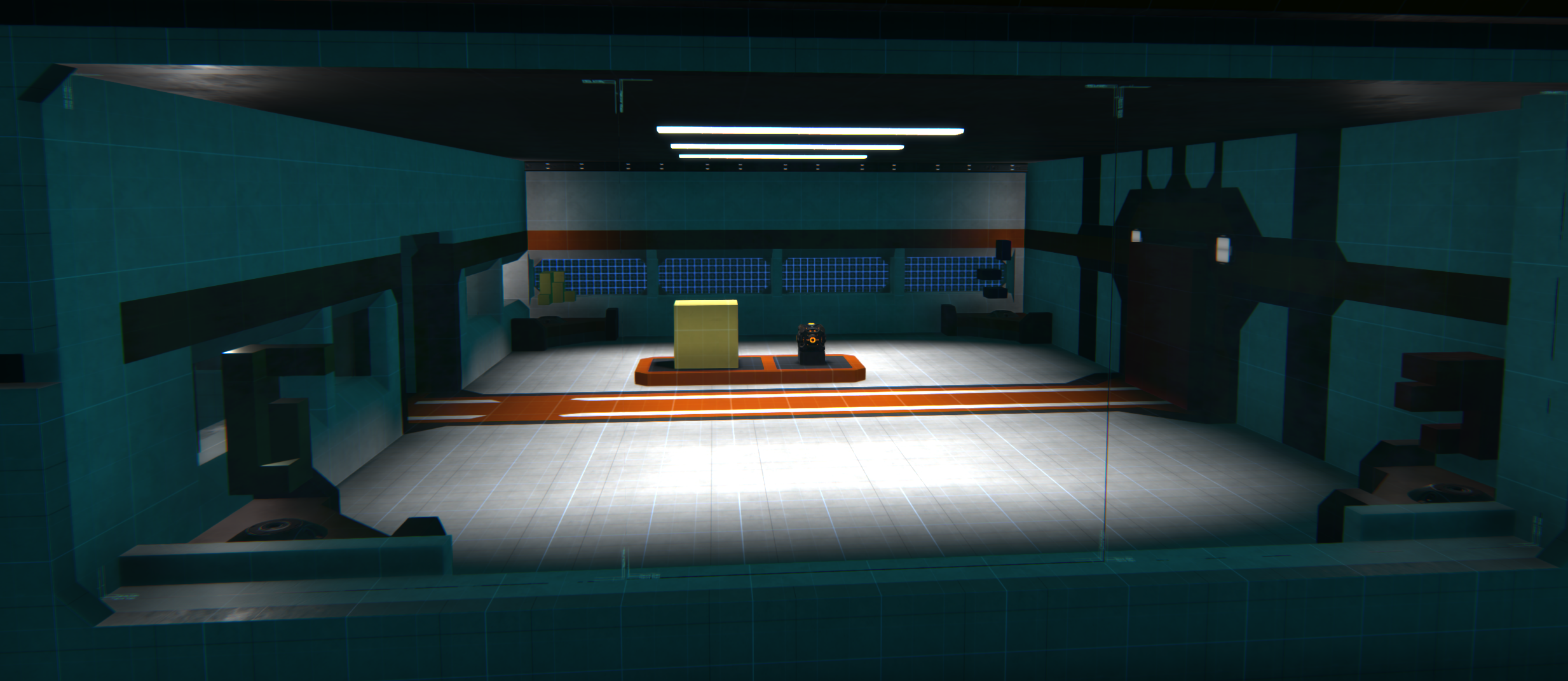
The second room taught players how to cut or copy shapes from existing voxel builds, and paste them in other locations.
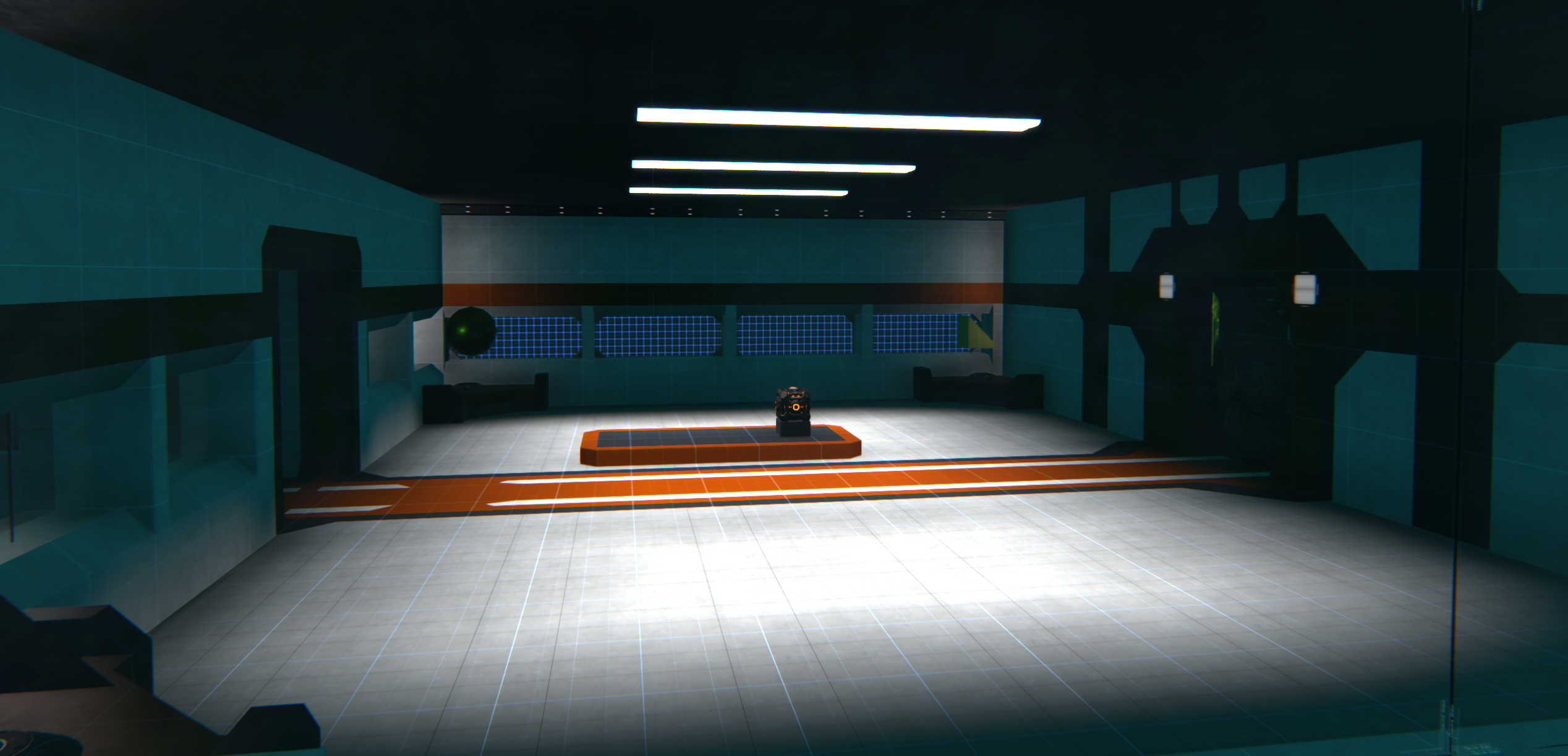
The first room to pull on what they learned in previous sections, I tasked players with using the copy/paste technique, paired with voxel placement, to create combinations of polygon shapes they copied from the corners. Once completed, the exit opened.
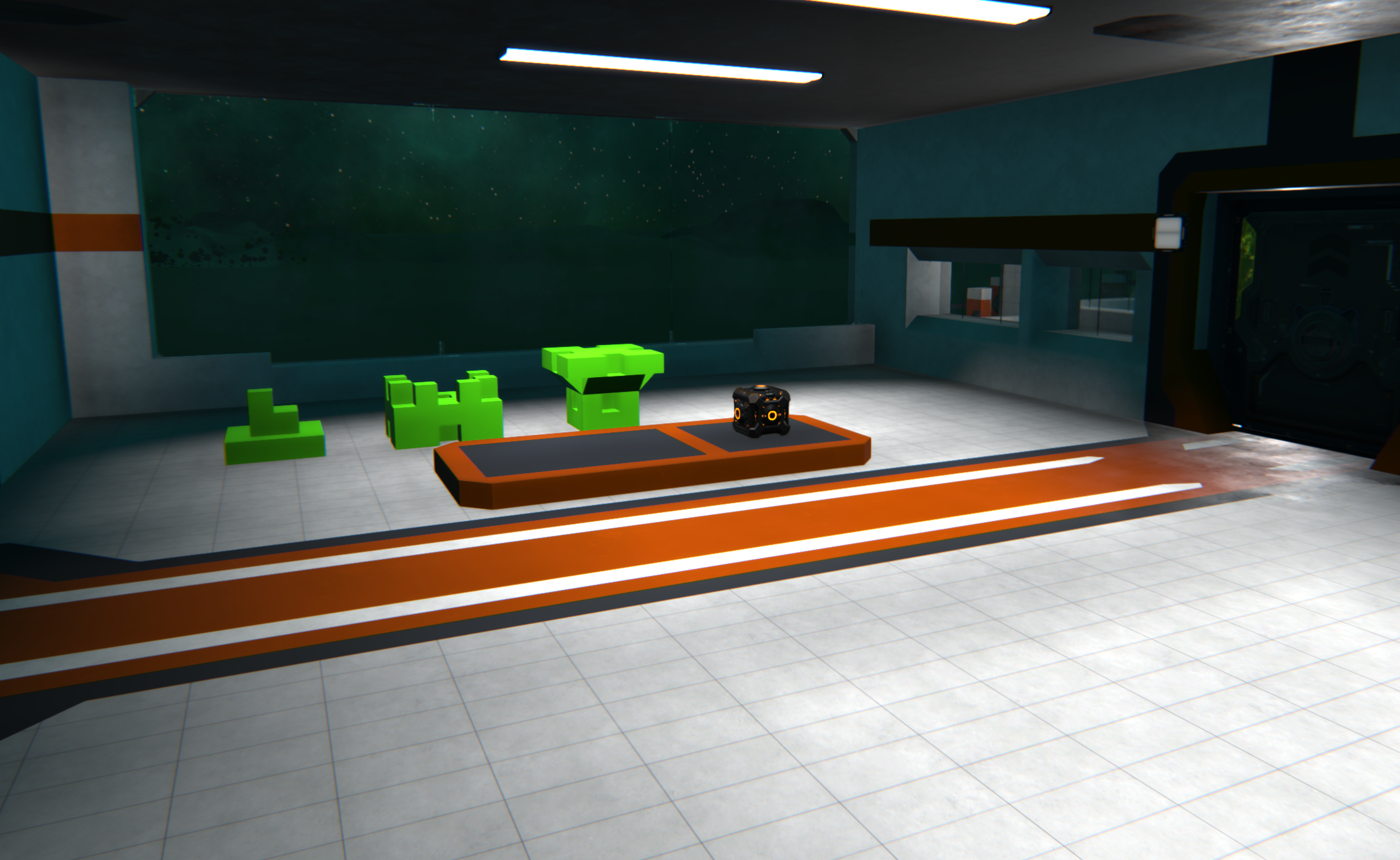
I iterated on this learning in the following room - players were presented with miscellaneous neon-green shapes, and had to mimic each one in sequence. The last would teach them how to deform voxels to create an angular effect simply through placement.
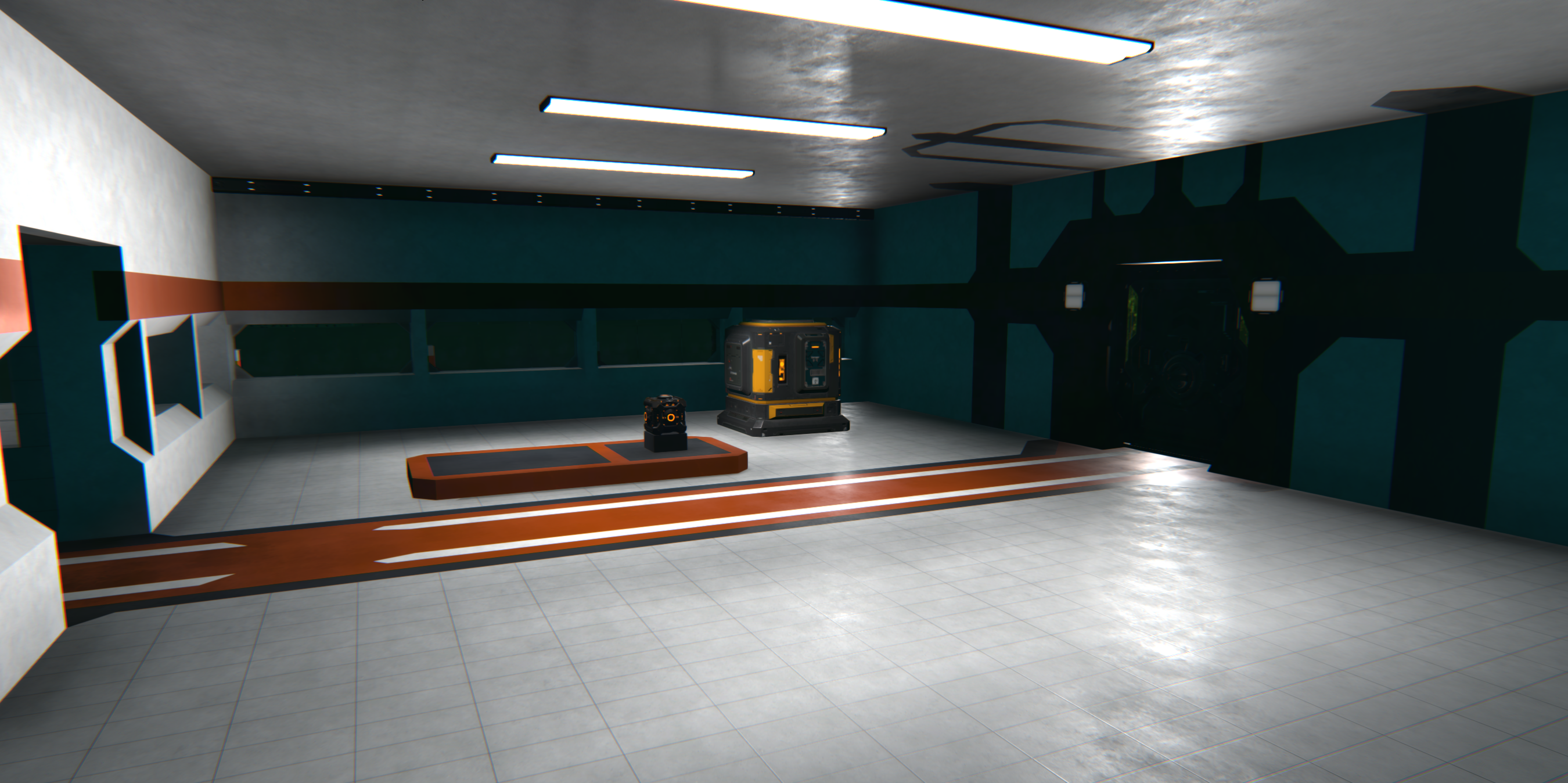
The final room changed things up. Here, they were given a selection of placeable objects - a door and some windows. They were instructed on how to use them. Once placed in accordance with the tutorial requirements, the door opened.
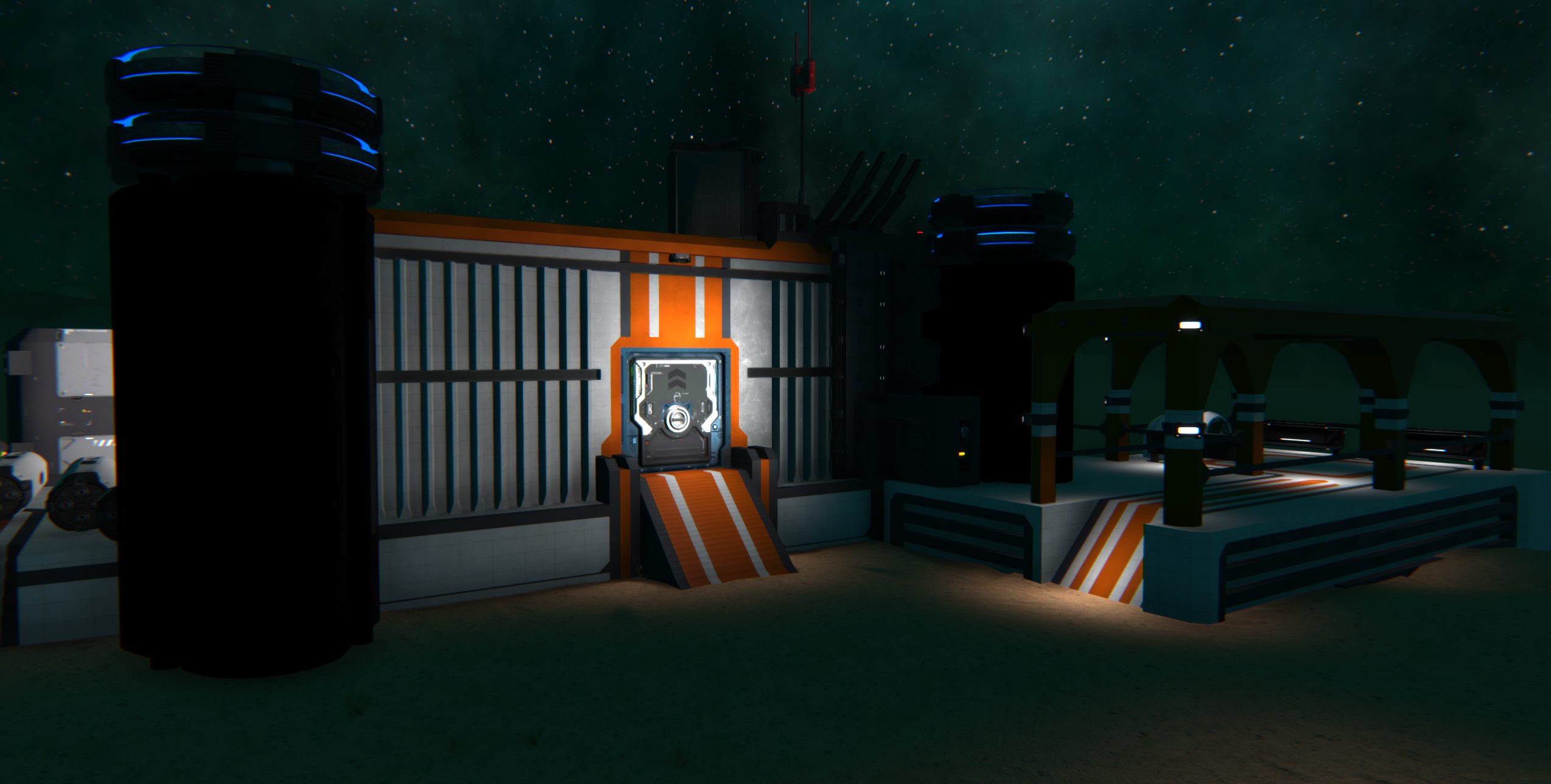
The player has access outside the building now, and had to locate the exit - this is where we instructed them on how to locate and follow waypoints.
In the Advanced tutorial, the player expanded on existing Build Tool knowledge, and learned how to create complex shapes, smooth voxels, add or remove volume, change selected tiles, and more.

The Advanced Build Tutorial allowed players chose the order of completion, and tackle more advanced elements of voxelcraft.

The Smoothing Tool room taught the basics of the smoothe tool, and tasks the player with copying this cat shape, and then smoothing it out.

In this room, players were taught how to target an area and apply a smoothing filter to the entire area rather than small, targetted segments.
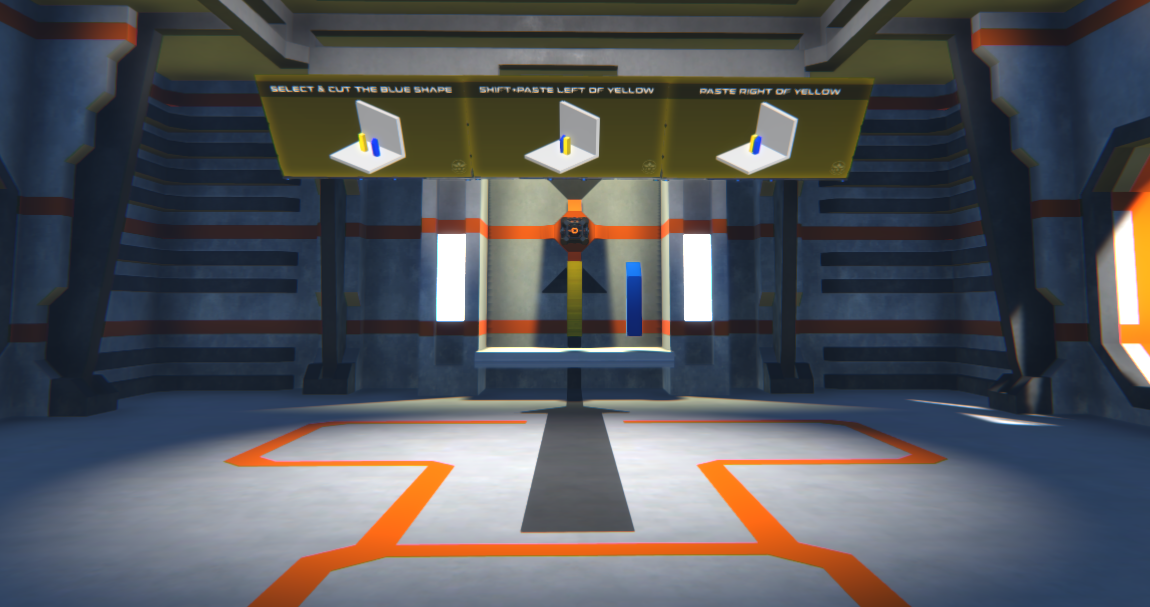
I then tasked the player with learning the advanced aspects of the copy/paste tool.
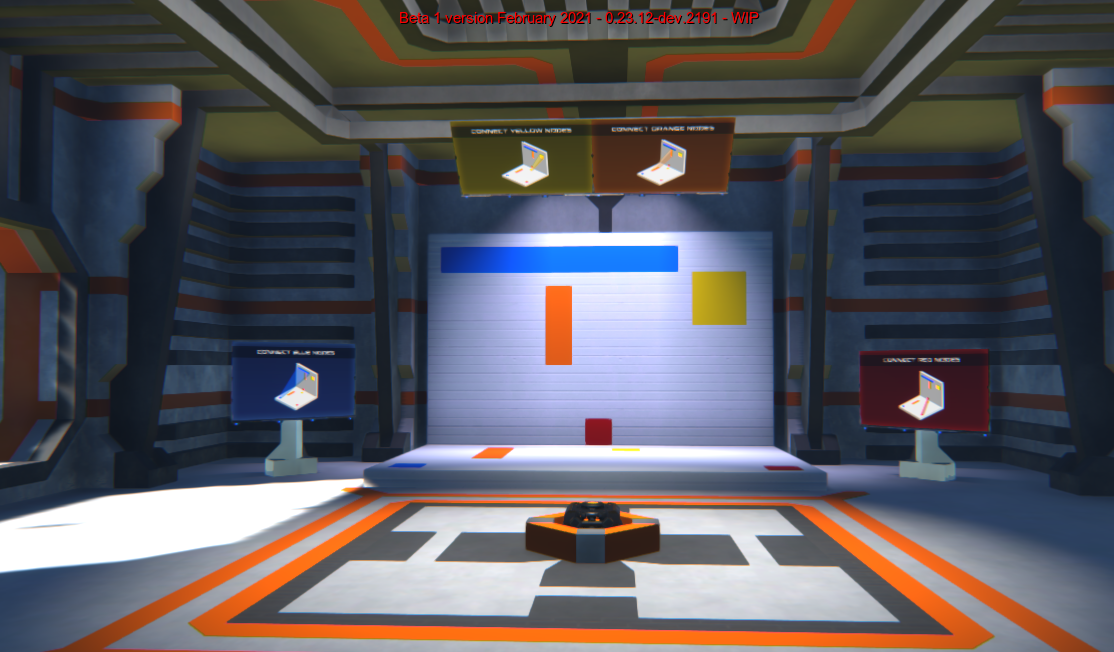
Finally, by using voxels to connect colored zones of matching block colors, I taught players to create angular components, and complex polygons.
A unique challenge of working Dual Universe that truly engaged the entire level design team was the Megastructure we called The Labyrinth. This kilometer-wide dungeon was a massive maze containing many complex puzzles using the games wiring. I began this herculean task by constructing the initial entrance section and exterior greebles for the enormous object.

The final entrance to scale, and thousands of greebled details.
The first puzzle - hidden switches that had to be triggered in a sequence to open the forcefield doors into the primary entrance shaft, was within the lobby area. I also used CSS, HTML and digital art to create custom screen interfaces to convey data to the player.

The primary lobby with hidden switches and custom data screen.

The greebles on the exterior took weeks to complete.


Samples from the level design documentation for the Labrynth
I also designed a large number of bases, outposts and similar structures to place manually across a solar system:

Market tutorial building.

Gunbase Alpha interior.

Gunbase Alpha exterior storage sheds area. with automated turrets

Adelon Drilling Station

Poseidon Shipyard Lobby

Poseidon Shipyard Tavern

Poseidon Shipyard Hallway with custom designed signage.
While players could craft their own ships piece by piece and experiment with realistic physics system, we still required a number of standardized ships that players could purchase, or that could be used for missions or other purposes.

The 'Fireball' racer. Impractical, but very fast.

The smallest player-purchased vehicle, the pygmy was flimsy, but extremely affordable and practical.

The rapier provided excessive ground speed, but poor handling in the air.

A simple, but very reliable hauler, miners loved this affordable early game option.

The Oxen was a heavy, slow, but very weight-capable hauler.
I created many interfaces, components, maps and other creatives, both graphically and using the in-engine handlers for CSS, HTML, Javascript and lua, which gave us insane levels of flexibility in what we could create!

An alien data screen design mockup.

A human-oriented design.

An example of the in-game CSS/HTML in action.
Documentation
Work Samples


